
Call-out fee, $80–$180
What most Sydney plumbers charge to attend. Ask for it up front, anyone who will not name it on the phone is telling you something.
When water is coming through the ceiling, the useful question is not "who opens at eight", it is "who answers now". We do. Around the clock across Wahroonga, a licensed plumber picks up, talks you through making it safe, and gets a crew moving.
The honest test: is water, waste or gas going somewhere it should not, and getting worse while you watch? A burst pipe, sewage backing up into the shower, a hot water tank dumping its load through the ceiling, or any smell of gas, those are emergencies, and waiting until morning multiplies the damage bill. Your first move for a burst pipe is the water meter: turn the stop valve clockwise and the flooding stops while we drive.
Then there is the category people apologise for calling about, the toilet that will not flush in a one-bathroom house, the blocked drain the night before an inspection, no hot water with a newborn at home. Call anyway. We run genuine 24/7 coverage across Wahroonga, Warrawee, Turramurra, Waitara and the wider Upper North Shore, and an after-hours call gets a plumber, not a promise of one tomorrow.


Original earthenware gives way at the joints, and it rarely announces itself politely. Roots find the joint, the joint opens, and the section finally lets go on a night with the house full and one bathroom working.
The suburb’s grand older homes often still run original earthenware and cast-iron pipes that corrode, crack and collapse, letting roots and debris slow every drain.
Old pipe is not automatically bad pipe. But when a heritage-era line fails once, it is worth knowing whether you have had one bad joint or a tired run. We clear it, camera it before we leave, and you keep the footage: so any decision about relining is yours to make on evidence rather than on our word.
Steep driveways, stairs down to the door, and no clear place to park all cost minutes in daylight and more after dark.
Wahroonga sits at the top of Sydney’s Upper North Shore (postcode 2076), one of Ku-ring-gai’s most prestigious leafy suburbs, grand heritage homes, huge garden blocks and streets that fade into bushland on the eastern edge. From the mansions off Cleveland Street to the older homes near the station and Fox Valley, its drains carry a lot of history, and we know the local ground well.
It helps enormously if someone can meet the crew at the street with a light on. And if your property has a hard access point, a locked side gate, a shared drive, a set of steps that is the only way in: tell us on the phone rather than when we arrive. It changes what comes off the van and how.
Heavy Upper North Shore downpours send leaf litter and runoff surging across large gardens, choking stormwater pits and soakwells that overflow toward the house.
A yard that floods in every serious downpour is a different problem from one that flooded once in a freak storm. The first is a blocked or undersized line and it will keep happening; the second is weather.
Telling them apart takes a camera on a dry day, not a guess in the rain. If it has happened twice, book the inspection between storms, clearing a surcharging pit at the height of it costs more and tells you less.
The genuine emergency in an older home is often not the size of the fault but the lack of an alternative. A single bathroom out of action with a family in the house is a call-out, whatever the textbook says about severity.
We treat it that way. If it is the only toilet, it goes to the front of the queue, and if we can talk you through getting it usable tonight so the visit can happen at daytime rates tomorrow, we will do that instead and say so on the phone.
A drain on a slope moves water fast, and fast is not always good. Waste can outrun the liquid carrying it on a steep run and settle at the first flat section, building up at exactly the same spot each time.
The tell is a blockage that recurs at the same interval in the same place. That is a gradient problem, not a usage problem, and no amount of careful flushing fixes it: the answer is to see the profile of the line and correct the section that is wrong.
A drainage system laid a century ago was built for a household that used a fraction of the water yours does. Add a second bathroom, a dishwasher and a washing machine, and lines that coped for decades start showing where they are weakest.
That is not an argument for replacing everything. It is an argument for knowing which sections are actually tired, so the money goes into those rather than into the whole run on the assumption that old means finished.
What most Sydney plumbers charge to attend. Ask for it up front, anyone who will not name it on the phone is telling you something.
Against roughly $120–$160 in business hours. Nights, weekends and public holidays sit at the top of the range.
Call-out, the first stretch of labour and minor parts, for the common jobs: an isolated burst, a blocked toilet, a failed valve.
Slab leaks, gas line faults and anything needing walls opened at 2am climb quickly. You will know the number before we start, not after.
If it can genuinely hold, isolated, contained, water off: we will say so on the phone and book you for daylight rates instead.
The price is agreed before work starts, including at 2am. Figures here are indicative of the 2026 Sydney market rather than a quote from us, you get your own number as a fixed price before any work starts.
Not a call centre. You describe what is happening, we tell you what to shut off right now, and whether this genuinely needs someone tonight, sometimes it does not, and we say so.
The nearest available crew heads for Wahroonga with the common failure points already stocked on the van: pipe, fittings, valves, drain gear.
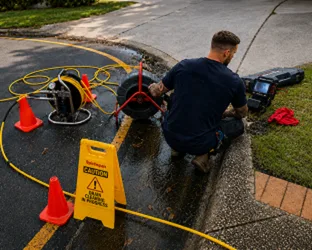
First job on site is stopping the damage: isolate, contain, make safe. Then you get a fixed price for the proper repair before it starts.

Most emergencies are permanently repaired on the spot. If a part has to wait for a supplier, you are left safe, watertight and functioning in the meantime.
Describe it and let us make the call with you. Genuine can-wait jobs get booked at daylight rates, genuine emergencies get a crew now.
Call for the fastest response, any hour. Or send the form, after-hours enquiries get a callback from the on-call plumber, not an inbox.

Leave your details and our local Wahroonga team will call you back fast.