
Simple locates, $200–$400
Short runs, decent access, leak confirmed and marked without drama.
Somewhere between the meter and your taps, water is escaping, you can see it on the bill even when you cannot see it anywhere else. We pinpoint concealed leaks across Wahroonga with instruments instead of crowbars, so the repair opens one small hole in exactly the right place.
A concealed leak cannot keep all three of its secrets. It makes a sound, pressurised water escaping sings in frequencies acoustic gear tracks along the pipe. It changes temperature, the wet path, or the warm plume of a leaking hot line, paints itself across thermal imaging. And it loses pressure, isolate the pipework section by section against a gauge, and the guilty run confesses while the innocent ones hold steady.
One signal narrows it; three signals convict. Where the readings intersect we mark the surface, and that mark is routinely metres from where instinct says to dig, especially under Wahroonga’s renovated homes, where pipe runs wander in ways no drawing ever recorded. Every centimetre of accuracy is a tile that stays on the floor.
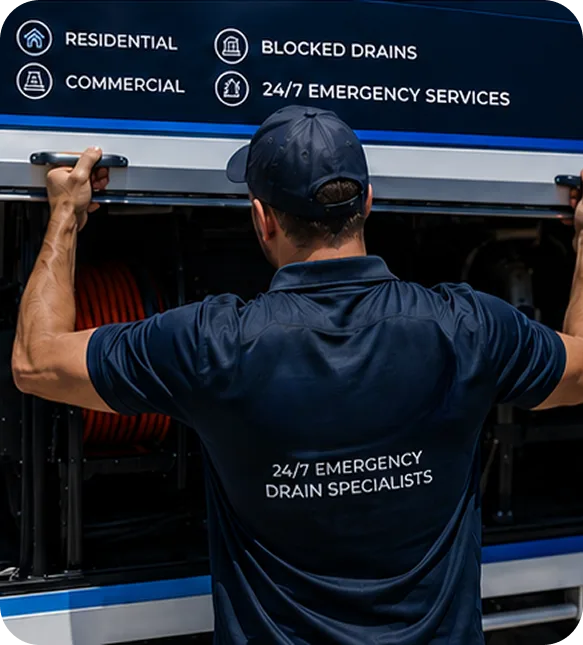

The suburb’s grand older homes often still run original earthenware and cast-iron pipes that corrode, crack and collapse, letting roots and debris slow every drain.
Lath and plaster, pressed metal ceilings, original tiling and heritage listings all raise the cost of being wrong. In a period home the value of precise location is not the plumbing saved, it is the finishes not destroyed.
So we locate to the smallest area the equipment will support, and where a listing is in play we document what we propose to open before anything is touched.
Wahroonga sits at the top of Sydney’s Upper North Shore (postcode 2076), one of Ku-ring-gai’s most prestigious leafy suburbs, grand heritage homes, huge garden blocks and streets that fade into bushland on the eastern edge. From the mansions off Cleveland Street to the older homes near the station and Fox Valley, its drains carry a lot of history, and we know the local ground well.
On sloping ground, water leaving a pipe travels along whatever path is easiest until something stops it. By the time it appears it can be metres from the failure, several properties away, and always further down.
So the damp patch is a starting point, not a destination. We work uphill from it with correlation equipment rather than digging where the evidence happens to be visible.
Not every escape of water is under pressure. A cracked drain leaks into the ground continuously without affecting the meter, without a pressure drop, and often without a single symptom inside the house.
The distinction decides the method. Pressure leaks are found with acoustics and the meter; drain faults are found with a camera and, where needed, a smoke or dye test.
Older homes are a record of everyone who has worked on them. Original runs, a post-war bathroom teed in somewhere unexpected, a laundry added in the sixties, and nothing documented.
That is why detection on a heritage-era property starts by establishing where the pipes actually go. Tracing the layout is half the job and it is the half that prevents opening the wrong wall.
Mains pressure rises as elevation falls, and properties low on a slope routinely sit at the top of the acceptable range. Sustained high pressure is a genuine cause of leaks rather than merely a contributor.
If your property is low-lying relative to the surrounding streets and you have had more than one fitting fail, a pressure test costs very little and a limiting valve costs little more. It is the cheapest leak prevention available.
Short runs, decent access, leak confirmed and marked without drama.
First hour with the full instrument kit, acoustic, thermal, pressure, on a typical concealed leak.
Beyond the first hour: extended runs, tight access, multiple suspects to eliminate.
Deep slab lines and multi-storey mysteries at the top of Sydney's range.
Priced off exactly what the detection proved, fixed before it starts, same crew, same visit, no second call-out.
The comparison to hold onto: exploratory demolition costs more than detection before its first guess is even wrong. Figures here are indicative of the 2026 Sydney market rather than a quote from us, you get your own number as a fixed price before any work starts.

The meter test done properly, plus your bills. If the evidence says there is no supply leak to find, you hear exactly that, free of a detection invoice.
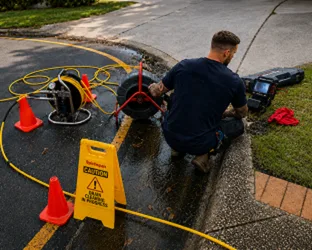
Isolating pipework section by section against a pressure gauge, hot versus cold, line by line, convicts one run and acquits the rest.

Acoustic tracking and thermal imaging walk the guilty run until the signals stack. The X on the floor is accurate to centimetres.

Access opens exactly at the mark; the failed section is repaired and pressure-tested. If the run's condition argues for a reroute instead, both numbers land first.
Then the leak is real and already on the clock. Book the detection before it surfaces somewhere expensive.
Instruments, a mark on the floor, one hole, one fix: and the meter finally standing still.

Leave your details and our local Wahroonga team will call you back fast.